
About Prism Match 3D
Prism Match 3D drops you into a floating cluster of cubes that you rotate to find matching tiles, sending them to a tray at the bottom where every set of three clears. It is a match-three tile puzzle built in three dimensions, with levels designed to be worked through rather than raced. Click and drag is the whole control scheme, and it plays the same on a desktop as it does on a phone.
What sets it apart is the pace. Nothing is pushing you. There is no timer, no penalty for sitting and staring at the pile, nothing punishing you for taking your time. That makes it a different kind of game than most of what is in front of you all day—mindless and mindful at the same time.
It suits visual thinkers in particular. Nothing in the pile moves on its own — tilt it a little left or right, up or down, and tiles you could not see a moment ago come into view. They were there the whole time. The puzzle is not really about matching, it is about finding the angle that shows you what was already in front of you. Sound is optional and it is perfectly playable muted at a desk. Early levels are gentle enough to play half-attentively; later ones need you to actually look.
If you think better with your hands busy, this is built for that. Some people work through a problem while walking, or driving, or fiddling with something. Prism Match 3D occupies the surface of your attention and leaves the rest of you free to go somewhere else. Some players with ADHD describe it as calming in exactly that way: focused enough to stay alert, light enough to let the room carry on around you. It is close to why people scroll for hours, with one real difference: this one has a bottom to reach. You finish the stack, and you are done, and that is an exit no feed is designed to give you.
Who it is not for: anyone after adrenaline, a leaderboard, or something to compete at. This is a slow game on purpose.
Platform Report
How it plays on each device, tested by Games2
- Smooth and stable, even on the biggest puzzles. Great on 1-2.4K Resolutions and browsers.
- Tile tray at the bottom is tiny on 4K screens; held tiles are hard to tell apart.
- Exceptional tile scaling and stability on iPad and Fire Tablet 10.1; zero-timer relaxing puzzle stru
- none.
- Super smooth and relaxing, great for quick sessions
- rashes once puzzles get bigger (iPhone)
Our Test Setup
The devices and gear we used to play and review Prism Match 3D.
- Desktop / PC: MINISFORUM DeskMini UM790 Pro mini PC (AMD Ryzen 9 7940HS, Windows 11 Pro); Dell Mini 3040 (Ubuntu 26.04 LTS)
- Monitors: Samsung 32-inch; Dell 22-inch
- Tablets: iPad Pro 10.5-inch (1st generation); iPad Pro 12.9-inch (4th generation, A12Z); iPad Pro 12.9-inch (5th generation, M1); Amazon Fire HD 10 (11th generation)
- Phones: iPhone 12 Pro Max; iPhone 17 Pro Max
- Keyboards: Razer BlackWidow V3; HP OEM wireless keyboard and mouse combo
- Mouse: SOLAKAKA SM822 wireless gaming mouse
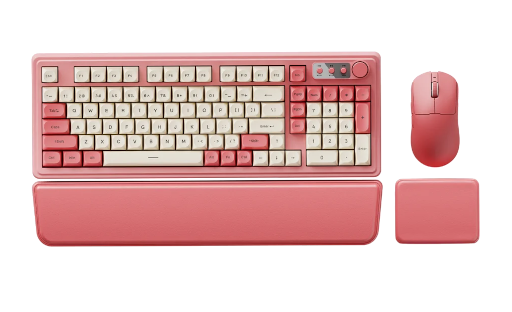
- Keyboard & mouse combo: EWEADN V97 Arc Membrane Keyboard and Mouse Combo | View on Amazon | Buy direct from EWEADN
The Classic Games Behind Prism Match 3D
Prism Match 3D is new, but the two ideas it is built on are not: matching tiles out of a pile, and collecting them in sets. Both started on the table, and both are still worth having in your hands.
Mahjong: The Original Tile Game
Mahjong took shape in China in the 1800s, a game of carved tiles drawn, matched and set into winning hands. It crossed to America in the 1920s and set off a full-blown craze. Its tiles later became the pieces of Mahjong Solitaire, the single-player puzzle where you clear a stacked pile by removing matching free tiles. That stacked pile is the direct ancestor of the cluster you turn in Prism Match 3D. A real tile set is heavy, clicks beautifully, and makes a handsome thing to leave on the table.


SET: The Match-Three Card Game
In 1974 geneticist Marsha Jean Falco was sorting cards of genetic data when she noticed a pattern worth playing with. Published in 1991 as SET, it became a classic: deal the cards, then spot three that belong together before anyone else does. It is the same quiet scanning Prism Match 3D asks for, looking across the pile until a set of three jumps out. Quick to learn, fun at any age, and it fits in a pocket.