
About Car City Adventure
Car City Adventure is a road-building puzzle. The car does not take instructions — it drives whatever path exists in front of it. Your job is to slide the road tiles around until that path actually connects, start to finish, then set it moving and watch whether you got it right.
That split is what makes it work. You are never steering. You are rearranging the world the car will drive through, which is a different kind of thinking — less reaction, more looking at the whole board and seeing which piece is in the wrong place. The click to start the car is the moment you find out whether you were right.
It stays light throughout. Early levels are a couple of tiles and an obvious route; later ones hand you more terrain than you need and the trick becomes spotting which part of it is a dead end. No timer, no score to defend, nothing punishing you for staring at it for a minute first.
Controls are click and drag, so it works the same on a desktop and a phone. Who it is not for: anyone who wants to drive the car. You never touch it.
Platform Report
How it plays on each device, tested by Games2
- Sharp, smooth frame rate, full board in view
- Occasional crash mid-level
- Touch dragging feels natural, screen easy to read
- Occasional crash mid-level
- Board stays readable, plays smoothly
- Occasional crash mid-level
The Classic Games Behind Car City Adventure
Long before this game reached your screen, people were sliding tiles and cars around by hand. Here are the three physical classics it grew out of, and why each one is worth a spot on your table.
As an Amazon Associate, Games2.net earns from qualifying purchases. It costs you nothing extra and helps keep the games free.
Rush Hour: The Car Puzzle Classic
In the 1970s, Japanese puzzle master Nob Yoshigahara put cars on the board with a traffic-jam sliding puzzle. It reached shelves worldwide in 1996 as Rush Hour and became one of the best-known logic games ever made. Like Car City Adventure, you never drive. You slide the cars and trucks around until the path to the exit is clear. If you enjoy this game, Rush Hour is its closest cousin, with challenge cards from beginner to expert.


The 15-Puzzle: Where Sliding Began
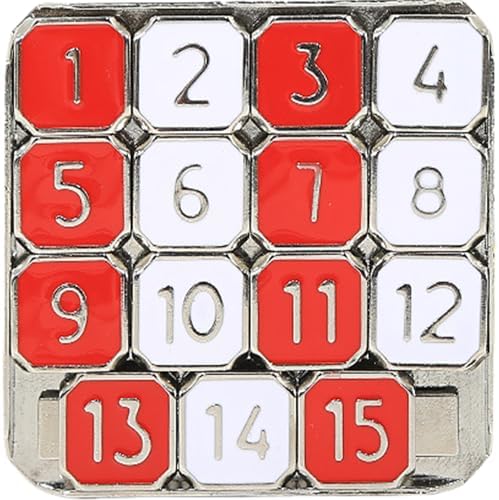
The sliding-tile idea goes back to around 1874, when Noyes Chapman, a postmaster in upstate New York, created the 15-puzzle: fifteen numbered tiles in a 4×4 frame with one empty space. By 1880 it was a full-blown craze across America and Europe. The road tiles you slide in Car City Adventure follow the same rule, one empty space and every move counts. The original is still a satisfying pocket-sized brain teaser today.


Wooden Picture Sliders: The Toy-Box Version
Toy makers soon shrank the puzzle to a smaller 3×3 board and swapped the numbers for pictures, so children could slide pieces until an image came together. These chunky wooden versions teach the same plan-before-you-move thinking that Car City Adventure rewards, and they make a great screen-free gift for younger players.